

If you want to elevate your audio game, consider these top inline mic preamps: sE Electronics DM1, TRITON AUDIO FetHead, TEYUN Microphone Preamp, M1 Preamplifier, and Cloud Microphones Cloudlifter CL-1. Each offers unique features, like robust construction and clean gain, enhancing your sound quality without noise interference. Whether you’re recording, performing, or streaming, there’s an option that fits your needs and budget. Stick around to discover which preamp might best suit your setup.
sE Electronics DM1 Dynamite Microphone Preamp Bundle

If you’re a sound engineer or musician looking to elevate your audio game, the sE Electronics DM1 Dynamite Microphone Preamp Bundle is an outstanding choice. This active inline preamp boosts the signal of passive ribbon or dynamic microphones by 28 dB, enhancing audio levels without noise or coloration. Its class-A design and high-grade FETs guarantee low self-noise, making it perfect for long cable runs. Built with a robust, all-metal construction, the DM1 is roadworthy and reliable. Plus, it comes with two 20-foot XLR cables and reusable cable ties, guaranteeing you’re organized and ready for any session.
Best For: Sound engineers and musicians seeking to improve audio quality from passive ribbon or dynamic microphones.
Pros:
- High Gain: Provides 28 dB of gain, enhancing audio levels without introducing noise or coloration.
- Low Self-Noise: Class-A design and high-grade FETs ensure minimal self-noise for clearer sound.
- Durable Build: All-metal construction makes it reliable for use in challenging environments.
Cons:
- Phantom Power Requirement: Requires 48V phantom power, which may limit compatibility with some setups.
- Careful Handling Needed: Some users report the need for careful handling to avoid contact issues.
- Single Channel: Designed for one channel, which may not be sufficient for multi-mic setups without additional units.
TRITON AUDIO FetHead In-Line Microphone Preamp Bundle with 20 XLR-XLR Cable

The TRITON AUDIO FetHead In-Line Microphone Preamp Bundle is an excellent choice for musicians and sound engineers seeking to enhance the performance of their ribbon or dynamic microphones. This low-noise Class-A JEFT amplifier features a double single-ended topology with four matched JFETs, ensuring clean gain. Weighing just 1.01 pounds and made from durable metal, it’s portable for studio and touring use. Simply attach it to your balanced microphone cable, activate 24 to 48V phantom power, and experience the difference. Plus, it includes a 20-inch XLR-XLR cable, providing everything you need to elevate your audio game.
Best For: Musicians and sound engineers looking for a reliable and portable microphone preamp to enhance the sound quality of ribbon and dynamic microphones.
Pros:
- Low-noise Class-A JEFT amplifier ensures clean and clear audio gain.
- Lightweight and durable metal construction makes it ideal for both studio and touring applications.
- Includes a 20-inch XLR-XLR cable, providing added convenience for immediate use.
Cons:
- Requires 24 to 48V phantom power, which may not be available on all equipment.
- Limited customer ratings may indicate less widespread user feedback compared to other products.
- May not suit all microphone types, as it is specifically designed for ribbon and dynamic microphones.
TEYUN Microphone Preamp with 28dB Gain (DM1 Dynamite Active)
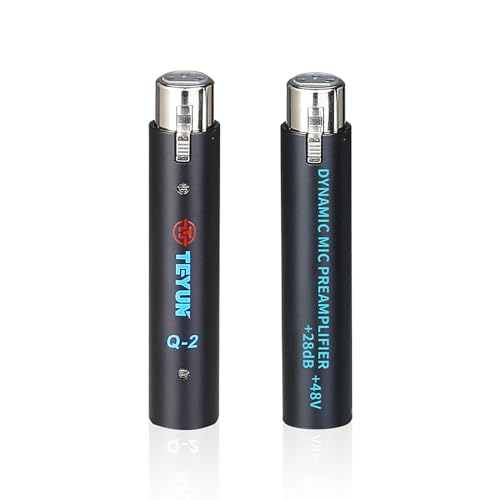
For those seeking a reliable microphone booster, the TEYUN Microphone Preamp with 28dB Gain (DM1 Dynamite Active) stands out as an excellent choice. This compact preamp enhances clarity while reducing feedback noise, making it perfect for studio recording, live streaming, and more. With a fixed gain of +28dB, it maintains sound quality without significant alteration. Its plug-and-play design guarantees easy setup with 48V phantom power, and its lightweight, durable casing makes it portable. Customer feedback highlights its low noise and user-friendliness, although some mention it may not drastically boost weak signals. Overall, it’s a solid option for various audio applications.
Best For: Those looking for a compact and efficient microphone booster suitable for studio recording, live streaming, and stage performances.
Pros:
- Enhances microphone clarity while minimizing feedback noise.
- Plug-and-play design ensures easy setup with 48V phantom power.
- Lightweight and durable casing makes it highly portable.
Cons:
- May not significantly boost weak signals.
- Fixed gain of +28dB might not suit all user preferences.
- Some users have reported limited effectiveness in certain audio scenarios.
M1 In-line Microphone Preamplifier with 28dB Gain
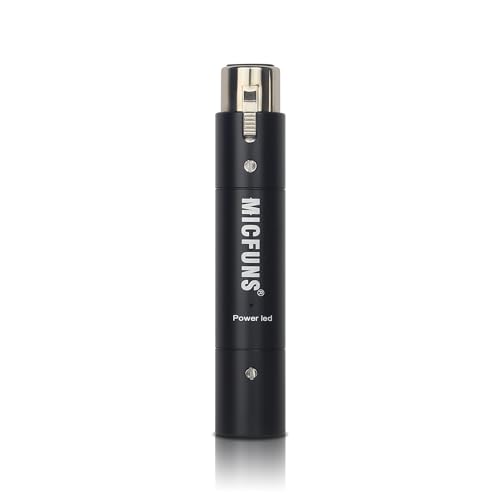
Looking to boost your audio quality without breaking the bank? The M1 In-line Microphone Preamplifier might be just what you need. With 28 dB of gain, it enhances audio signals for dynamic and passive ribbon microphones, making it especially useful for low-output models like the Sony ECM-44B. Weighing only 80g and featuring a rugged metal housing, it’s built to withstand noise and electrical interference. Just remember, it requires 48V phantom power from your mixer or interface. While some users report mixed gain performance, it’s generally a solid budget choice for improving your sound.
Best For: Budget-conscious users looking to enhance the audio quality of low-output microphones.
Pros:
- Affordable option for improving audio levels, particularly for dynamic and passive ribbon microphones.
- Lightweight and durable design with rugged metal housing that minimizes noise and electrical interference.
- User-friendly with simple setup requiring only 48V phantom power.
Cons:
- Mixed reviews on gain performance, with some users experiencing closer to 18 dB instead of the advertised 28 dB.
- Potential noise issues, such as hissing or increased background noise, reported by some users.
- Limited suitability for professional applications due to its budget-friendly design and performance variability.
Cloud Microphones Cloudlifter CL-1 Mic Activator

Designed specifically for those using dynamic or ribbon microphones, the Cloud Microphones Cloudlifter CL-1 Mic Activator delivers ultra-clean gain that enhances audio clarity without compromising sound quality. Weighing just 0.32 kilograms, its compact design makes it portable and easy to integrate into your setup. With a sensitivity of +25 dB and a signal-to-noise ratio of 35 dB, it boosts quiet audio sources while maintaining a natural sound. Users rave about its plug-and-play capability, improving sound quality and reducing background noise. If you’re looking for professional-grade audio, the Cloudlifter CL-1 is a worthy investment for your home studio.
Best For: The Cloud Microphones Cloudlifter CL-1 Mic Activator is best for podcasters, live streamers, and musicians using dynamic or ribbon microphones seeking enhanced audio clarity and professional sound quality.
Pros:
- Ultra-clean gain boosts audio clarity without introducing noise or distortion.
- Plug-and-play design allows for easy setup and integration with existing equipment.
- Compact and portable construction makes it suitable for both studio and on-the-go use.
Cons:
- Potential interference from nearby mobile devices may cause audio distortion for some users.
- Higher price point compared to other mic preamps may not fit all budgets.
- Limited to one channel, which might not be ideal for users needing multi-channel setups.
StudioMan DPM1 XLR Dynamic Microphone Preamp

The StudioMan DPM1 XLR Dynamic Microphone Preamp stands out as an exceptional choice for musicians and audio engineers seeking a reliable and portable solution for enhancing their dynamic microphones. With a robust 29dB gain and low-noise signal boost, it guarantees your audio remains clear and vibrant. The plug-and-play feature means you can connect it easily to any standard XLR setup without fuss. Its compact design, weighing just 1.76 oz, makes it perfect for both studio and stage use. Plus, the locking mechanism prevents accidental disconnections, so you can focus on your performance without interruptions.
Best For: Musicians and audio engineers seeking a portable, high-quality preamp to enhance dynamic microphones in both studio and live settings.
Pros:
- High Gain: Offers a robust 29dB clean gain for improved audio clarity.
- Easy Setup: Plug-and-play functionality allows for quick connections without the need for drivers.
- Durable Design: All-metal housing and integrated locking mechanism ensure reliability during performances.
Cons:
- Limited to Dynamic Mics: Specifically designed for dynamic microphones, so may not suit those using condenser mics.
- Weight: While portable, some may find the weight of 1.76 oz slightly heavier compared to other compact preamps.
- Price Point: Although considered a good value, it may be more expensive than basic preamps on the market.
Triton Audio FetHead in-Line Microphone Preamp
Product not found or API error.
For those seeking a reliable solution to boost the performance of low-output microphones like the Shure SM7B, the Triton Audio FetHead in-Line Microphone Preamp stands out as an exceptional choice. Weighing just 1.76 ounces, its compact design easily integrates into your setup without extra XLR cables. Powered by 48V phantom, it delivers clean gain with reduced noise, enhancing audio clarity for voice-over, music production, and streaming. Users praise its effectiveness, reporting significant improvements in sound quality. With a sturdy metal build and a 4.5-star rating from over 1,700 reviews, the FetHead is a worthy investment for serious audio enthusiasts.
Best For: Serious audio enthusiasts and professionals looking to enhance the performance of low-output microphones in various applications.
Pros:
- Delivers clean gain and reduces noise levels, improving overall audio clarity.
- Compact design allows for easy integration into existing setups without the need for extra XLR cables.
- Highly rated by users, with a 4.5-star average from over 1,700 reviews, indicating strong customer satisfaction.
Cons:
- Some users have reported issues with build quality, such as misaligned logos.
- Delivery times can be lengthy, with reports of up to 4 weeks for shipping.
- Alternatives like Cloudlifter exist, but may not offer the same compact design or affordability.
Factors to Consider When Choosing Inline Mic Preamps
When choosing inline mic preamps, you’ll want to take into account several key factors. Think about the gain level requirements, noise performance, and compatibility with your microphones. Additionally, don’t overlook the power supply needs and the build quality to guarantee durability over time.
Gain Level Requirements
Choosing the right gain level for your inline mic preamp is essential to achieving ideal audio performance. Most inline mic preamps offer gain levels ranging from 25 dB to 30 dB, with some even exceeding 29 dB to effectively boost low-output microphones. If you’re using dynamic or passive ribbon microphones, aim for at least 28 dB for maximum clarity and volume. Don’t forget to take into account your microphone’s specific gain needs; for instance, a Shure SM7B typically requires higher gain levels to perform well. Finally, think about your intended use. Whether you’re recording in the studio or performing live, different scenarios might require adjustments in gain levels based on the microphones you use.
Noise Performance Standards
While evaluating inline mic preamps, noise performance standards play an essential role in determining the overall audio quality you’ll achieve. The signal-to-noise ratio (SNR) is key; higher values, like 58 dB, indicate cleaner amplification and less background noise. You’ll want low self-noise for high-quality audio, which premium preamps often achieve through class-A circuitry and high-grade components. Look for preamps that offer around +28 dB of gain, ensuring you can amplify quiet signals without adding hiss or artifacts. Additionally, consider user feedback—ratings around 4.6 out of 5 stars usually reflect strong noise reduction and audio clarity. This insight can guide you to the right preamp for your audio needs.
Compatibility With Microphones
Audio quality isn’t just about noise performance; compatibility with your microphone is equally important. When selecting an inline microphone preamp, make sure it matches your microphone type—dynamic, condenser, or ribbon—as some preamps are tailored for specific technologies. Check the phantom power requirements; many dynamic mics need 48V, while some preamps operate on 24V or higher. Confirm the preamp’s input and output connections align with your audio setup, as most use standard XLR connections. Also, consider the preamp’s gain specifications, since different microphones have varying output levels; a preamp with adequate gain, like +28dB, can greatly enhance low-output mics. Finally, choose preamps designed to minimize noise and interference, especially when using sensitive microphones.
Power Supply Needs
Understanding power supply needs is vital when selecting inline microphone preamps, as it directly impacts their performance. Most inline preamps require phantom power, typically at 24V or 48V. Confirm the power supply matches your preamp’s specifications; using the wrong voltage can lead to poor sound quality or even damage. Some models isolate phantom power from the microphone, which is essential for protecting sensitive ribbon mics. Check that your audio interface or mixer can provide the necessary phantom power for the preamp to function correctly. Additionally, consider the power consumption of the preamp, as higher consumption might affect power distribution in setups with multiple devices. Make informed choices to guarantee the best audio quality.
Build Quality and Durability
When choosing inline microphone preamps, considering build quality and durability is essential for ensuring reliable performance. Look for preamps made with metal housings, as they generally offer better resistance to wear and tear compared to plastic options. A robust design not only enhances durability but also minimizes interference and noise, delivering a cleaner audio signal. Many high-quality preamps come with shielding to protect against electromagnetic interference, promoting stability during use. Additionally, features like locking mechanisms can prevent accidental disconnections, further enhancing reliability. By prioritizing these aspects, you’ll invest in a preamp that withstands the rigors of live performances and studio sessions, ensuring your audio remains exceptional every time you hit record.
Size and Portability
Size and portability play an essential role in selecting the right inline mic preamp for your needs. Many models feature compact dimensions, making them easy to transport and integrate into various audio setups. When you’re on the move, a lightweight design—often under 2 pounds—enhances usability during live performances or when traveling for recordings. Look for preamps with rugged metal housing that prioritize durability while maintaining a slim profile, ensuring they can withstand challenging environments without sacrificing portability. Additionally, the ability to connect directly to a balanced microphone cable streamlines your setup, reducing clutter and enhancing mobility. Compact inline preamps often come with plug-and-play designs, making for quick setup and ease of use in diverse audio environments.
Price and Value Comparison
Choosing the right inline mic preamp involves balancing price and value, as the market offers a wide range of options to fit different budgets. Start by evaluating the price range, from budget-friendly models to high-end units. Look at the gain levels; many preamps provide a standard 28 dB to 29 dB, ideal for dynamic and ribbon microphones. Customer ratings and feedback can give you insight into the preamp’s effectiveness and overall satisfaction. Don’t overlook warranty and support options, as longer warranties can enhance your investment’s value. Finally, consider additional features like built-in noise reduction or a compact design, which may justify a higher price and improve usability in various audio setups.
