

If you’re looking for the best USB XLR adapters for high-quality audio recording in 2025, you’ll want to take into account options like the 6.6FT USB-C to XLR Male Cable and the USB Microphone Cable, XLR to USB A Converter. Both provide excellent sound fidelity and ease of use. You’ll find choices that cater to various needs, from podcasting to music production. Keep exploring to discover even more top recommendations and features that suit your setup.
6.6FT USB-C to XLR Male Cable for Audio Equipment
Product not found or API error.
If you’re a musician, DJ, or audio engineer looking for a reliable connection between your USB-C devices and XLR-equipped audio gear, the FT USB-C to XLR Male Cable is your best choice. This 6.6FT cable guarantees seamless compatibility with modern USB-C technology while delivering professional-grade audio performance. It supports balanced audio signals, minimizing noise and interference, making it perfect for live performances and studio recordings. Built with durable materials, including a reinforced braided jacket and gold-plated connectors, it withstands daily use. Its lightweight, tangle-free design makes transport easy, assuring you’re always ready for your next gig.
Best For: Musicians, DJs, and audio engineers seeking a reliable connection between USB-C devices and XLR-equipped audio equipment.
Pros:
- High-quality audio transmission with minimal noise and interference.
- Durable construction with a reinforced braided jacket and gold-plated connectors.
- Portable and tangle-free design for easy transport and setup.
Cons:
- Limited length of 6.6FT may not suit all setups.
- Compatibility is restricted to USB-C devices and XLR audio equipment.
- May be priced higher than standard audio cables.
USB Type C to XLR Male Converter Adapter Cable (6.6 FT)
Product not found or API error.
The USB Type C to XLR Male Converter Adapter Cable (6.6 FT) is the perfect solution for musicians and audio enthusiasts who need to connect their USB-C devices to professional audio equipment. This high-fidelity cable features 24K gold-plated connectors and oxygen-free copper conductors for superior sound quality. Designed for mono audio output, it works seamlessly with devices like the iPhone 16 and Samsung Galaxy S24. The durable nylon braided jacket guarantees tangle-free use, while the flexibility allows for easy storage. Keep in mind, this cable is for audio playback only, not suitable for recording. Enjoy your music with clarity!
Best For: Musicians and audio enthusiasts looking to connect USB-C devices to professional audio equipment for high-quality playback.
Pros:
- High-fidelity audio transmission with 24K gold-plated connectors for superior sound quality.
- Durable nylon braided jacket ensures tangle-free use and enhances cable lifespan.
- Compatible with a wide range of USB-C devices, making it versatile for various setups.
Cons:
- One-way transmission only; cannot be used for recording purposes.
- Designed for mono signals, may not deliver optimal performance for stereo audio.
- Signal loss may occur when used for music playback.
USB C to XLR Cable (6.6 FT)
Product not found or API error.
For musicians and content creators seeking seamless audio output, the USB C to XLR Cable (6.6 FT) stands out as an essential tool. This cable connects your smartphone, laptop, or tablet to XLR female interfaces, delivering one-way audio transmission. While it enhances sound quality with its built-in DAC decoding chip, it’s not designed for recording or two-way communication. Its heavy-duty build guarantees durability, withstanding over 17,000 bends, while double-layer shielding minimizes interference. However, be aware of mixed user experiences regarding compatibility and occasional overheating. Overall, it’s a valuable addition to your audio setup, promising reliable performance in various applications.
Best For: Musicians and content creators looking for a reliable solution to connect their devices to XLR interfaces for audio output.
Pros:
- Durable construction with heavy-duty metal shell and gold-plated connectors.
- Built-in DAC decoding chip enhances sound quality for high-fidelity playback.
- Flexible design allows for over 17,000 bends, ensuring long-lasting use.
Cons:
- One-way audio transmission limits functionality for recording or two-way communication.
- Mixed user experiences regarding compatibility with certain devices.
- Reports of overheating and audio transmission only in mono mode.
USB C to Dual XLR Male Audio Cable (2M/6.6FT)
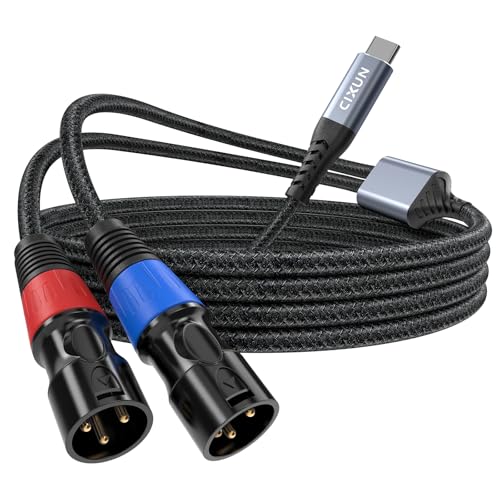
Designed specifically for performing artists, the USB C to Dual XLR Male Audio Cable (2M/6.6FT) delivers high-quality audio transmission from your USB-C devices to power amplifiers or speakers. With support for 32-bit/384kHz audio output, it guarantees pristine sound quality. This cable is compatible with a wide range of devices, including the latest smartphones and tablets. Its quad-core OFC conductors minimize signal loss, while dual shielding enhances clarity. Plus, the durable nylon braided design withstands over 20,000 bends, making it perfect for dynamic use. Enjoy plug-and-play convenience, clean audio output, and reliable performance for your rehearsals and recordings.
Best For: Performing artists looking for high-quality audio transmission from USB-C devices to power amplifiers or speakers.
Pros:
- Supports high-resolution audio output with 32-bit/384kHz capability for pristine sound quality.
- Durable design with nylon braided protection, capable of withstanding over 20,000 bends for dynamic use.
- Plug-and-play functionality ensures easy setup and clean audio output, ideal for rehearsals and events.
Cons:
- Does not support audio input, limiting its use to output only.
- Not recommended for connection to MIC input ports or non-stereo inputs, which may lead to sound distortion.
- Compatibility may vary with some USB-C devices, requiring verification before use.
USB Microphone Cable, XLR to USB A Converter (6.6Ft)
Product not found or API error.
If you’re looking for a straightforward solution to connect your XLR microphones to a computer, the USB Microphone Cable, XLR to USB A Converter (6.6Ft) is an excellent choice. This plug-and-play adapter doesn’t require any additional drivers; just plug it into your computer, and it’s ready to go. With 24k gold-plated connectors and 22AWG 4N Oxygen Free Copper, you’ll enjoy minimal signal loss and pristine audio quality. It’s compatible with various operating systems and perfect for music recording or live broadcasts. Plus, dedicated customer support guarantees you’ll get help whenever you need it.
Best For: Those seeking an easy-to-use solution for connecting XLR microphones to computers for recording or live broadcasting.
Pros:
- Plug-and-play functionality ensures a hassle-free setup with automatic driver installation.
- High-quality construction with 24k gold-plated connectors and 22AWG Oxygen Free Copper minimizes signal loss and enhances audio clarity.
- Compatible with multiple operating systems, making it versatile for various user needs.
Cons:
- Not suitable for gaming consoles like PS2, PS3, WII, or XBOX.
- Some users may experience compatibility issues with specific applications.
- Limited to a 6.6Ft length, which may not be sufficient for all setups.
HOSONGIN XLR to USB Recording Cable (10Ft) for Microphone

The HOSONGIN XLR to USB Recording Cable is an excellent choice for anyone looking to connect a microphone to their computer easily, thanks to its plug-and-play functionality. With a generous 10-foot length, you can set up your recording space comfortably. It supports various operating systems, from Mac to Windows, without needing driver installations. The high-quality construction guarantees reliable sound transmission, although you’ll need to provide 48V phantom power for condenser mics. Weighing just 5.2 ounces, it’s portable and user-friendly. While some users report minor recognition issues, overall, it delivers solid performance for music recording and streaming.
Best For: Those seeking a reliable and affordable solution for connecting microphones to computers for music recording and streaming.
Pros:
- Plug and Play: Easy setup with no driver installation required, compatible with multiple operating systems.
- High-Quality Construction: Durable materials ensure effective sound transmission for a better recording experience.
- Versatile Length: The 10-foot cable provides flexibility in setup, allowing for comfortable recording arrangements.
Cons:
- Phantom Power Requirement: Requires an external 48V phantom power source for condenser microphones, which is not included.
- Initial Recognition Issues: Some users experience problems with the cable being recognized by their devices upon first use.
- Limited Dynamic Range: Sound quality may be quieter and less dynamic compared to higher-end recording options.
USB Microphone Cable (6.6FT XLR to USB)
Product not found or API error.
For anyone looking to elevate their audio recording game, the USB Microphone Cable (6.6FT XLR to USB) offers an effortless plug-and-play solution. You can easily connect your XLR microphones to USB devices, making it perfect for podcasting, streaming, and music recording. With a 16-bit/48kHz DAC chip, it guarantees studio-grade audio with low noise and high fidelity. Built for durability, it features 24K gold-plated connectors and a reinforced PVC jacket, assuring reliable performance. Plus, it’s compatible with Windows, macOS, and Linux, and backed by a lifetime warranty, giving you peace of mind while you create.
Best For: This USB Microphone Cable is best for podcasters, streamers, and musicians looking for an easy way to connect XLR microphones to USB devices.
Pros:
- Plug-and-Play Simplicity: Easily connects XLR microphones to USB devices without complicated setup.
- Studio-Grade Audio: Offers low-noise, high-fidelity sound quality with a 16-bit/48kHz DAC chip.
- Durable Design: Equipped with 24K gold-plated connectors and a reinforced PVC jacket for long-lasting performance.
Cons:
- Gain Level Concerns: Some users report issues with gain levels not matching that of dedicated audio interfaces.
- Limited to Dynamic Microphones: Requires an external 48V phantom power supply for condenser microphones, limiting usability.
- Replacement Limitations: May not fully replace the functionality of a dedicated audio interface for professional audio setups.
Factors to Consider When Choosing Usb Xlr Adapters
When choosing USB XLR adapters, you need to take into account several key factors to guarantee you get the best fit for your needs. Think about compatibility with your devices, audio quality standards, and the build quality for durability. Also, assess cable length and the specific functionalities you require for your recording setup.
Compatibility With Devices
Choosing the right USB XLR adapter hinges on its compatibility with your devices, so you’ll want to guarantee it works seamlessly with smartphones, laptops, and tablets. Not all adapters support recording from XLR to USB, so check their specifications carefully. Make sure the adapter is compatible with your operating system, whether it’s Windows, macOS, or Linux, as compatibility varies. Look for models that support a range of USB-C devices from brands like Apple, Samsung, and Google for broader usability. Additionally, consider whether the adapter handles mono signals, which could affect playback quality in stereo setups. Finally, verify if the adapter allows for two-way audio transmission, especially if you plan to use it for live performances or studio recordings.
Audio Quality Standards
Audio quality is paramount in any recording setup, making the selection of USB XLR adapters a vital decision. To guarantee lossless sound transmission, look for adapters that support high-fidelity audio standards like 24-bit/192kHz. Gold-plated connectors are essential, as they minimize signal loss and corrosion, enhancing overall audio quality. A built-in DAC (digital-to-analog converter) is also essential; it converts digital signals to analog, considerably affecting audio clarity and fidelity. Additionally, make certain the adapter supports balanced audio signals to reduce noise and interference, resulting in cleaner sound for professional applications. Finally, check for internal shielding in the adapter’s construction, which protects against external electromagnetic interference, maintaining audio integrity during transmission.
Build Quality and Durability
While selecting USB XLR adapters, you can’t overlook the importance of build quality and durability, as these factors directly impact your setup’s reliability. Look for cables with heavy-duty metal connectors and reinforced PVC jackets; these materials enhance durability and resist wear from bending. A nylon braided jacket design offers extra protection against tangling and extends the cable’s lifespan by reducing fraying. Opt for cables that have passed extensive bend tests—over 20,000 bends—indicating flexibility and robustness, ideal for frequent transport and setup. Gold-plated connectors resist corrosion, ensuring stable connections while maintaining audio quality. Finally, internal shielding, like double-layered shielding with oxygen-free copper, minimizes interference, enhancing your cable’s durability and performance in various environments.
Cable Length Considerations
When it comes to USB XLR adapters, selecting the right cable length is key to achieving ideal performance. The typical length of around 6.6 feet (2 meters) works well for most studio and live setups. Longer cables can lead to signal degradation, so consider the distance between your USB device and XLR equipment carefully. Cables that are too short might limit your setup options, forcing you to reposition gear, while excessively long cables can introduce interference and noise. A 6.6-foot cable strikes a balance, offering portability and ease of use for professionals on the go. Always verify the cable length you choose accommodates your specific audio arrangement without compromising sound quality.
Functionality and Use Cases
Choosing the right USB XLR adapter can greatly impact your audio experience, especially if you plan to use it across different devices and setups. Most adapters primarily transmit audio one-way, making them ideal for sending signals from devices like smartphones and laptops to XLR-equipped gear. Look for models that support high-fidelity output, featuring built-in DACs for lossless audio. Compatibility is key, so verify the adapter works with your smartphones, tablets, and computers for versatility in home studios or live performances. Also, consider durability; reinforced materials and gold-plated connectors enhance longevity. Be aware that while many adapters excel in playback, some might have limitations like mono output or compatibility issues, so choose wisely based on your specific needs.
